This guide explains how to manage Vehicle Availability with practical procurement and reservation practices, so buyers reduce delays and avoid mismatched inventory. Objectively, Vehicle Availability refers to how reliably a supplier can provide cars within the requested timeframe, trim, and condition. It is shaped by fleet turnover, logistics lead times, documentation checks, and regional demand patterns.

Vehicle Availability is not simply whether a car exists—it’s whether a supplier can reliably deliver the right vehicle when you need it, in the specification you requested, with the documentation and condition expected. In day-to-day operations, the biggest sources of avoidable friction are mismatched availability windows, unclear stock status, and slow validation of insurance, registration, or rental terms. For buyers and fleet planners alike, the very effective approach is to treat availability as a process: confirm inventory by build/trim, verify delivery or pickup timelines, and document conditions up front. This guide provides an objective framework to help you make smarter decisions without guessing.
At an industry level, Vehicle Availability reflects the intersection of multiple moving parts: inventory management, vehicle sourcing, transportation, compliance checks, and demand volatility. Even when a dealer or fleet operator lists “available” stock, the operational reality can differ depending on whether the vehicle is physically on-site, reserved, in transit, awaiting reconditioning, or undergoing compliance preparation.
For objective context, industry participants commonly define availability through measurable indicators such as sell-through rate (how quickly inventory is sold), lead time (the time from order to delivery), and serviceability (whether the vehicle can be safely and legally deployed). While exact formulas vary by organization, the underlying concept remains consistent: Vehicle Availability is the practical ability to fulfill a request within defined parameters.
However, the same word can hide very different operational situations. “Available” can mean “ready now” or it can mean “expected sometime soon.” It can mean “available in general” or “available only if a different process goes your way.” It can also be influenced by how a company partitions inventory into buckets like: (1) physically on-hand, (2) allocated to pending deals, (3) in quality control, (4) in reconditioning, (5) staged for shipping, and (6) temporarily inaccessible because documentation is under review.
When you don’t unpack these buckets, you can end up booking too early, assuming the vehicle is ready, only to discover later that it is undergoing repairs, waiting for parts, subject to title verification, or held because a compliance checklist hasn’t been signed off. The result is not just inconvenience; it can create financial exposure: missed handover dates, rental coverage gaps, staffing disruption, or fleet utilization losses.
From an expert procurement and operations perspective, Vehicle Availability is shaped by several fundamental factors:
Two vehicles can be “available” in the same database while being radically different in real fulfillment behavior. For instance, one might be ready for handover and parked in a staging bay with inspection passed; another might be flagged as “available” but is still waiting for cosmetic repairs, detail, a required emissions certificate, or final paperwork release from a third party.
A frequent misconception is that all suppliers manage stock with the same rigor. In reality, Vehicle Availability depends on how transparent and disciplined a supplier’s inventory process is. When evaluating a supplier, look beyond marketing language and ask operationally precise questions.
Consider whether the supplier can provide:
One practical way to reduce ambiguity is to avoid questions that can be answered vaguely. Instead of asking, “Is it available?” ask, “What is its availability bucket right now (on-hand/reserved/in-transit/reconditioning) and what date/time will it transition to ready-for-handover?” A supplier that uses a structured inventory workflow will usually be able to answer this clearly. If they can’t, that’s a signal that the claim of availability is not operationally grounded.
Another dimension is whether the supplier can confirm readiness steps beyond the vehicle’s physical state. Many delays come from paperwork dependencies rather than transport issues. Examples include verification of title release, verification of identity, credit approval processing, or a delay in receiving a document from a third party (such as a leasing company or an auction service). If the supplier is unable to explain those dependencies and timelines, the availability promise may be fragile.
Even when two vehicles have a comparable list price, their real total cost can differ because availability affects negotiation leverage and operational risk. If a vehicle is scarce or requires additional logistics time, suppliers often adjust pricing to reflect the costs of sourcing and readiness. Conversely, when inventory is abundant and already ready for handover, pricing can stabilize.
Because you did not provide specific numeric price information or supplier names, this guide keeps pricing discussion general and structured. The objective takeaway is that Vehicle Availability should be priced alongside the likelihood of successful fulfillment. A lower price paired with uncertain timing can become more expensive once you account for downtime, alternate transport, or schedule disruptions.
To make this more practical, consider pricing as a combination of three components:
In a well-managed deal, the supplier should be able to explain (at least conceptually) how readiness steps affect timeline and why certain stock may require additional buffer. If they cannot, you can still make a defensible decision by comparing availability windows and writing clear terms, rather than relying on price alone.
If you want fewer surprises, use a workflow that turns “availability” into an auditable commitment. Below is a practical guide you can apply whether you’re purchasing for personal use, managing a small fleet, or coordinating a larger operational rollout.
Start by specifying what must be true for the vehicle to satisfy your use case. Non-negotiables usually include:
If you’re running a fleet, non-negotiables may extend to operational standards like service interval history, tire condition baseline, fuel economy expectations, and compatibility with existing equipment (charging systems, mounts, telematics integrations, or remote control keys).
Instead of asking broadly, use a written spec sheet. It doesn’t have to be complex, but it should be unambiguous. A good spec sheet answers: “What exact configuration are we agreeing to?” and “What variations are allowed without renegotiation?”
This matters because “closest match” is where many disputes occur. If substitutions are allowed, define the acceptable alternatives and who approves them. If substitutions are not allowed, you need explicit commitment terms that protect you.
When you ask for Vehicle Availability, insist on a status category and evidence. A clear supplier will categorize the vehicle as one of the following:
If a supplier only says “available” without a bucket, treat it as insufficient for decision-making. You can still move forward, but you should do so with a contingency plan and more conservative timeline assumptions.
A common failure in booking decisions is focusing on the day you want the vehicle rather than the date the supplier can legally and operationally deliver it. Ask for the “ready-for-handover” date/time and not just an expected shipping date.
In many deals, the gap between arrival and handover exists because of last-mile tasks: final inspections, documentation review, signing, and compliance checks. If you schedule your operations based on arrival rather than handover readiness, you may experience a mismatch.
Documentation often moves slower than vehicles. Depending on your region and vehicle type, it can include:
Ask: “When will each document be ready?” rather than “Can you provide documents?” If documents are delayed, delivery may still be possible, but operational use (registration, driving legality, or insurance coverage) may not be possible immediately.
Once the supplier confirms an availability bucket and timeline, you should lock the commitment with written terms. The terms should clarify:
When a supplier uses vague terms like “subject to availability,” you should push for a more specific policy. “Subject to availability” may be legally true, but it is operationally risky for your planning. For fleets and scheduled use, you need a time-bound commitment.
| Scenario | What “Availability” should mean | Suggested supplier confirmation | Conditions/requirements to request |
|---|---|---|---|
| Vehicle is on-site (ready to deliver) | Physically present and not already allocated | Live inventory status update and hold confirmation | Condition report, inspection completion proof, handover schedule |
| Vehicle is reserved or in-progress | Allocation is controlled and dates are known | Reservation reference and revised ETA | Written hold terms, change-of-availability policy, backup vehicle option |
| Vehicle is in transit | Estimated arrival with verified routing | Shipping checkpoint updates and time buffer | Delivery ETA window, reconditioning timeline, documentation readiness timeline |
| Vehicle must be sourced externally | Supplier can obtain matching specification | Source plan and spec matching process | Option-level confirmation, substitution policy, escalation path if match fails |
| Vehicle availability differs by nearby area | Local stock plus coordinated transfer | Regional sourcing map by inventory center | Transfer time expectation, transfer cost disclosure, local pickup/return rules |
To strengthen reliability, standardize a short list of conditions you require for any Vehicle Availability commitment. Industry teams often treat these as “contractual operational gates,” because they reduce downstream disputes.
Standardization matters because it eliminates “negotiation drift.” In fast-moving negotiations, it’s easy for important conditions to be left out. A standardized gate list ensures consistency across multiple vehicles or multiple suppliers—particularly critical when you coordinate fleet procurement.
Vehicle Availability challenges are influenced by macro-level automotive and logistics dynamics, including supply-demand balance, manufacturing variability, and transportation capacity. For readers who prefer a reliable baseline, the following sources help contextualize how vehicle supply and availability can shift over time:
When interpreting this context, remember that Vehicle Availability can vary significantly by brand mix, local dealer network, and inventory concentration strategy—even when global trends look stable. A region with high demand or limited carrier capacity can experience delays even if overall vehicle production is trending normally.
There’s also a behavioral layer: if a supplier sees demand rising, they may allocate “available” inventory to customers who respond fastest, leaving other buyers waiting for reconditioning or repackaging. In other words, availability can become partly market-driven and partly process-driven. The remedy is to require a time-bound hold and documented readiness steps.
Below are expert practices that consistently reduce the “gap” between what is listed and what can actually be delivered on time. These methods are used by fleet managers and professional purchasing teams because they are process-driven rather than assumption-driven.
Define acceptable parameters (transmission type, engine variant, seating configuration, key technology features) and specify what substitutions are allowed. This reduces the risk of receiving a close-but-not-right vehicle.
Ask whether the vehicle is on-hand, reserved, in-transit, or undergoing reconditioning. If the supplier cannot categorize it, you should treat the availability claim as provisional.
When you reach an agreement, set a clear hold period aligned to your decision timeline. Without a hold, Vehicle Availability may change due to competing demand.
Even “ready” vehicles can require last-mile documentation checks, inspection paperwork, or compliance steps. A short buffer prevents schedule failures.
Ask for a backup vehicle (or a prioritized shortlist) that meets your non-negotiables. This is especially important when inventory is concentrated in a nearby area and transfers may be needed.
If you are evaluating used vehicles, insist on condition documentation. If you are working with a new vehicle inventory flow, confirm inspection completion and delivery readiness steps.
Many delays are not supplier delays; they are internal approval delays. For fleets, align procurement approvals, insurance approvals, and driver onboarding steps so that once the vehicle is ready, you can accept it immediately.
Instead of “ETA: Tuesday,” track: reservation confirmed → documentation released → inspection passed → handover scheduled → pickup/delivery performed. This makes it easier to diagnose why a slip happened and who is responsible.
Because your keywords include “Vehicle Availability” without a specified city or country, localization is applied generically through the term “nearby.” In practical terms, buying within a nearby region can improve responsiveness—especially for pickup scheduling, transfer coordination, and faster documentation processing—yet it also introduces variability: the nearest inventory center may have fewer options, or stock may be more sensitive to local demand swings (for example, high-turnover commuter patterns).
If you’re coordinating in a region with strong seasonal activity or frequent events, treat demand peaks as a condition that affects Vehicle Availability. Many suppliers experience the sharpest changes in “usable” stock status during these periods, even when overall inventory numbers appear stable.
There are also logistical trade-offs with “nearby.” Shorter transport times can improve the chance of meeting your handover window, but they can also mean:
To manage these trade-offs, ask suppliers to specify whether your vehicle will be transferred from another location and, if so, what the transfer ETA and readiness buffer are. “Nearby” should not be treated as a guarantee; it’s simply a factor that can help when combined with documented timelines.
Vehicle Availability behaves differently for new and used units because the source of uncertainty differs.
New vehicles can be affected by manufacturing lead times, shipping schedules, and production variability. Even if a vehicle is “allocated” to your order, there can be shifts in delivery timing due to port congestion, carrier schedules, or production changes. For new units, the key is to confirm not just the ETA, but what “availability” means in terms of build confirmation and allocation status.
When evaluating availability for new vehicles, confirm:
Used vehicle availability tends to depend more heavily on inventory reconditioning schedules, auction processing, and inspection outcomes. A used vehicle can be listed as available but still be in staging until detail work and mechanical checks are completed.
For used vehicles, prioritize:
Because used vehicle inventories can change quickly as trade-ins arrive and reconditioning queues shift, a time-bound hold and condition documentation become even more important.
Many buyers focus on the vehicle arriving at the location, but operational access depends on documentation being ready to use. Vehicle Availability is incomplete if the vehicle is physically present but not legally or practically usable.
Depending on your region and vehicle type, documentation readiness may involve:
A strong supplier will not only provide documents; they will also provide a timeline. Ask for a “document-by” date for each required item, and ask whether any document requires your input (for example, proof of address, ID verification, or insurance confirmation).
If your operation has strict start dates—like vehicle assignment for drivers, onboarding for a service team, or deadlines for scheduled deployments—then documentation readiness should be treated as a gating requirement equal to the vehicle’s physical readiness.
Condition readiness is a practical part of Vehicle Availability. A supplier can technically have a vehicle in their system but it may not meet minimum condition standards for safe or acceptable use.
For new vehicles, this can include:
For used vehicles, condition readiness also includes:
To avoid surprises, request condition documentation aligned with your acceptance criteria. If a supplier can’t provide evidence, ask them to describe what is expected before handover and whether the condition will be re-checked right before delivery/pickup.
Sometimes you may encounter multiple vehicles with different availability levels. You might have one option that is ready now but has minor spec deviations, and another that matches spec but is in transit. The goal is not to eliminate risk entirely (because risk exists in any supply chain), but to manage it intentionally.
Adopt a “decision under uncertainty” approach:
If you are unable to secure a hold, you should reduce your commitment. For example, you might:
This approach prevents “overcommitting” based on incomplete availability information.
If you work with a supplier repeatedly (fleet procurement) or you have multiple comparisons, you can improve decisions by examining availability performance patterns. Even without exact service-level metrics, you can often gather enough evidence from prior transactions or internal records.
Consider capturing a simple availability scorecard for each supplier:
Over time, this scorecard helps you predict whether a supplier’s “availability” label is reliable. Suppliers that consistently provide bucket-based status and written readiness documentation tend to perform better than those that rely on informal assurances.
This matters because Vehicle Availability isn’t just a single transaction quality. It’s a process quality, and process quality compounds over multiple bookings.
If you want Vehicle Availability to function like a managed commitment, the agreement terms should reflect operational reality. The contract does not have to be overly complex, but it must include enough detail to enforce expectations.
Use this contracting checklist:
When these items are missing, disputes become harder because the “availability” label has no objective enforcement mechanism. When these items exist, Vehicle Availability becomes measurable and manageable.
To make the above guidance more concrete, consider common breakdown patterns:
A buyer sees “available” and schedules pickup for a specific morning. The supplier confirms a VIN and promises it is “on the lot.” On pickup day, the vehicle is physically present but still waiting on reconditioning and the final inspection checklist. The buyer loses half a day and must negotiate for expedited documentation or alternative transport.
The fix isn’t necessarily to avoid that supplier; it’s to require the readiness gate: proof of inspection completion and a defined handover readiness condition. Without that, on-hand and ready-for-handover are different.
A fleet operator books a vehicle that is in transit, but the supplier only provides a broad arrival estimate. A carrier delay occurs, then paperwork is delayed because the VIN release happens only after the vehicle arrives and is checked. The fleet’s driver onboarding date slips, causing a chain of utilization losses.
The fix is to treat transit availability as provisional unless the supplier provides a delivery ETA window and a documentation readiness timeline, plus a buffer plan.
A buyer requested a specific trim and option set. The supplier uses “close match” wording and proceeds with booking. After documentation is prepared, the buyer discovers that a key option differs (for example, safety tech pack or seat configuration). Because substitution rules weren’t clearly defined, the buyer spends additional time negotiating a correction or accepting a compromise.
The fix is to require option-level confirmation and define substitution policy before documentation begins.
A vehicle arrives on time, but the paperwork needed for registration is not ready. The buyer or fleet cannot legally drive or use the vehicle even though the vehicle is physically available. This creates an operational downtime gap.
The fix is the documentation gate: define when key documents become available and clarify whether temporary permits or alternate documentation processes exist.
Vehicle Availability typically means the supplier’s ability to deliver a vehicle that matches your specification within a defined timeframe, considering whether the car is physically accessible, ready for handover, and accompanied by required documentation.
Request a status category (on-hand, reserved, in-transit, reconditioning) and ask for an explicit delivery/pickup window. Then require written confirmation of hold terms and acceptable substitution rules.
Common causes include parallel reservations, a vehicle being allocated to another customer, delayed reconditioning, compliance documentation that is not completed, or last-mile logistics shifts that change arrival timing.
Often, yes. Limited or uncertain availability can lead to pricing adjustments reflecting sourcing difficulty, readiness work, and operational risk. Conversely, on-hand inventory that is ready for handover can be more stable in price.
Depending on the vehicle type and your jurisdiction, ask what paperwork is required for transfer/registration (or rental initiation), and request an estimated timeline for when those documents will be ready for your use case.
Yes. A professionally managed supplier will often offer a prioritized shortlist or an alternative that meets your non-negotiable requirements, reducing downtime if availability changes.
It can be. New vehicle flows may depend heavily on production and logistics lead times, while used vehicle availability may depend more on inspection outcomes, reconditioning schedules, and reallocation of trade-in stock.
At minimum: specification expectations, delivery/pickup window, hold period, condition documentation requirements, and a clear policy for what happens if the vehicle cannot be fulfilled as promised.
If you can’t get a specific vehicle identifier, you should reduce commitment or make the agreement conditional on later identification. If VIN assignment happens later, ensure the contract states that the final assigned vehicle must match your options and readiness requirements, and that you can cancel or receive credit if match criteria aren’t met.
There isn’t a universal number because it depends on whether the vehicle is on-hand, reserved, in transit, or being sourced externally. As a rule of thumb: the less ready the supplier claims the vehicle is, the further in advance you should book. More importantly, plan around the readiness gate (inspection + documentation), not only around the handover date.
Fleet managers should ask about telematics setup timing, key provisioning, bulk documentation processing timelines, driver onboarding dependencies, and whether the supplier can provide consistent readiness across multiple units (not just one). They should also ask how substitute units are handled so fleet operations aren’t disrupted by option differences.
When availability is uncertain, negotiate based on documented readiness and clearly defined remedies for delay. For example, you can request a discount or credit if the supplier misses the handover window, or require free cancellation within a defined hold period. This aligns price with risk instead of leaving risk to you.
Vehicle Availability is top understood as a measurable, operational capability—not a marketing label. By confirming inventory status categories, aligning pricing with fulfillment risk, and standardizing your requirements for specification, readiness, documentation, and contingencies, you improve the odds of a smooth purchase or fleet deployment. Whether you’re sourcing within a nearby region or coordinating transfer logistics, the same expert principle applies: reliability comes from process, not optimism.
You did not provide specific supplier names, direct price information, or a particular location beyond the keyword structure. This article therefore focuses on an objective decision framework and industry-relevant practices rather than naming unverified vendors or quoting unconfirmed pricing. If you share your region, vehicle type, and the supplier(s) you are comparing, the same framework can be tailored into a tighter, more actionable evaluation.
Striking the Perfect Balance: Navigating Premiums and Out-of-Pocket Expenses in Senior Insurance Plans

Explore the Tranquil Bliss of Idyllic Rural Retreats

How to Make Lasting Memories at Disneyland Attractions

4rkojvsx Technology: Industry Insights and Buying Guide

Affordable Phones and Plans for Seniors

Affordable Full Mouth Dental Implants Near You

Unlock the Top Kept Secrets to Finding Your Ideal Dentist for Flawless Dental Implant Results!

Discovering Springdale Estates

Unveiling RS Sul Telecom Services


How to Evaluate Vehicle Availability with Confidence
This guide explains how to assess Vehicle Availability across dealers and fleets, so you can plan purchases or rentals with fewer surprises. “Vehicle Availability” reflects how quickly specific models can be reserved, delivered, or serviced based on inventory, sourcing, and lead times. Learn what to verify, how to compare suppliers, and which conditions affect availability decisions.

Understanding Vehicle Availability for Smart Fleet Decisions
This guide explains how vehicle availability shapes fleet operations, from sourcing to scheduling and maintenance planning. It provides objective background on key terms like inventory flow, lead times, and supply-side constraints, then translates them into practical decision criteria. You’ll also find a structured comparison, step-by-step evaluation conditions, and expert FAQs to support procurement discussions with confidence.

Vehicle Availability: Pricing, Suppliers, and Practical Steps
Vehicle Availability in the rental and mobility market determines how quickly customers can confirm delivery, lock in pricing, and match vehicles to trip needs. This guide explains how suppliers manage inventory, why rates move, and what to verify before booking. It also includes an objective comparison of practical options, clear requirements, and FAQs.
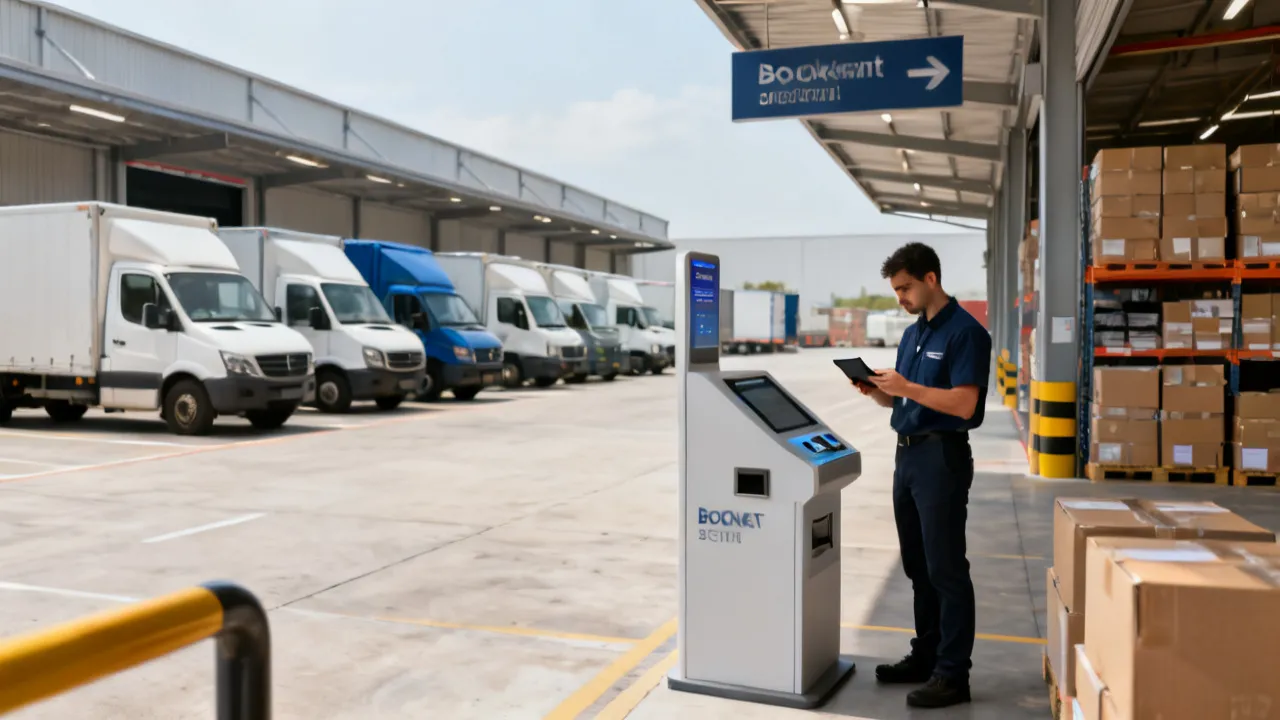
Vehicle Availability Guide for Smarter Fleet Planning
Vehicle availability determines whether deliveries, field work, and customer service can run on time. This guide explains how availability is measured, what typically limits it, and how suppliers and fleet managers can align schedules, maintenance, and demand. It also presents practical conditions, a decision framework, and expert-backed FAQs to reduce downtime.

Vehicle Availability: Expert Guide for Smart Planning
Vehicle availability is the key factor behind smooth rentals, fleet scheduling, and delivery commitments. This guide explains what “Vehicle Availability” means in practice, how suppliers manage inventory, what drives real-time supply, and how you can plan responsibly to reduce delays—using clear decision criteria, checklists, and requirements readers can apply across common vehicle categories.

Understanding Vehicle Availability for Smarter Sourcing
This guide explains how Vehicle Availability is assessed, confirmed, and managed when you’re sourcing cars through suppliers. You’ll learn objective ways to evaluate inventory readiness, lead times, and documentation requirements, plus practical decision criteria for buyers and fleet managers. Background context covers why real-world availability often differs from online listings.
